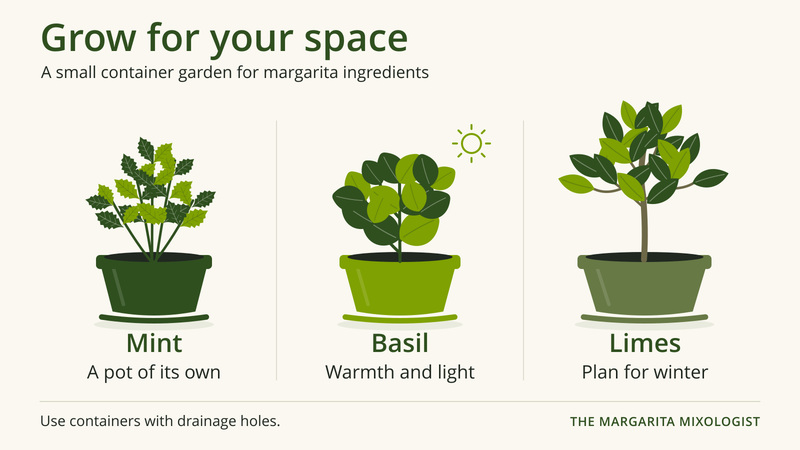
A margarita garden can start with one pot of mint or basil. Add a pepper plant if you enjoy spicy variations, or a cucumber if you have room for its growth. A lime tree is a longer-term project with more demanding light and winter-care needs. Choose the ingredient you will use, then match the plant to the space you actually have.
This guide focuses on outdoor containers during the frost-free growing season in temperate U.S. climates, with Maryland as a regional reference. Citrus needs a protected winter home where freezing weather occurs. Planting dates, heat, rainfall, and suitable varieties vary locally, so use your area’s extension advice rather than a single calendar for every garden.
Check your growing space before choosing plants
Watch where direct sunlight falls over the course of a day. A bright-looking patio can still spend much of the afternoon in shade. Warm-season vegetables generally need six to eight hours of direct sun, and containers may need daily watering in hot, dry weather. Choose a spot you can reach easily with water.
Use containers with drainage holes and a lightweight potting mix intended for containers. Ordinary garden soil is too dense for this job. Select the pot for the plant’s mature size, and check moisture regularly instead of assuming every pot needs the same watering schedule. The University of Maryland’s container-growing guide explains these choices in detail.
Mint: give it a pot of its own
Mint is a practical starting point if you want fresh sprigs for garnishing. Its main gardening catch is vigorous spread: planted freely in a bed, it can crowd neighboring plants. Utah State University Extension recommends containers or confined roots to manage that growth.
Choose a labeled culinary mint, such as spearmint, and keep it in a separate pot. Give it sun to partial shade and regular water, while allowing excess water to drain. Once the plant is established, snip young leaves and stems as needed. Start with a sprig beside the rim if you want to explore its aroma without changing your margarita’s measured liquid ingredients.
Basil: a warm-season herb for aromatic garnishes
Sweet basil suits a sunny container and offers another direction for a garden-grown garnish. It is a tender annual, so wait until the danger of frost has passed before planting it outdoors. Aim for six to eight hours of bright light and well-drained growing conditions.
Harvest small amounts as the plant grows. When cutting a whole stem, snip just above a pair of leaves. Regular pruning helps maintain leafy growth; letting the plant flower and set seed reduces leaf production. University of Minnesota Extension’s basil guide covers planting and harvesting. A leaf used as a garnish is a simple first experiment; record the variety if you later develop a basil-flavored recipe.
Jalapeños: allow for warmth, sun, and a larger pot
If spicy margaritas are your preference, a jalapeño plant is a useful candidate. Peppers need warm weather and should go outside after the soil has warmed. Maryland Extension recommends at least six hours of direct sun, preferably eight to ten, and a container of at least five gallons.
Allow room for the mature plant and support it as needed. Keep moisture reasonably even, and cut peppers from the plant instead of pulling and risking broken branches. The Maryland pepper guide also recommends gloves when processing chiles. Growing your own is no guarantee of a particular heat level in the finished drink; keep any recipe adjustments small and record what you used.
Cucumbers: choose the growth habit before the variety name
Cucumber slices make a straightforward garnish, but the plant needs more room than a little herb pot suggests. Look for a bush or compact type for a small space, or provide a trellis for a vining type. Cucumbers grow best in warm conditions and cannot survive freezing temperatures.
Check the variety’s pollination requirements, too. Many cucumbers need insects to move pollen between flowers; some varieties can produce fruit without pollination. That distinction matters on a screened balcony. The University of Minnesota cucumber guide explains the differences. Harvest slicing cucumbers before they become oversized with yellowing skins and large seeds.
A lime tree needs a winter plan
Before buying a lime tree, decide where it will live for the entire year. In Maryland and other places with freezing winters, a movable container and a suitable indoor space are essential. A sunny summer patio alone does not solve the winter light problem.
Maryland Extension’s dwarf-citrus guide recommends at least six hours of direct light, with more preferred. Supplemental lighting may be necessary indoors. Use a well-draining potting mix, avoid leaving the pot in standing water, and move the tree gradually between indoor and outdoor light conditions. Bring it inside before frost.
Choose a lime variety and rootstock suited to container growing, and check its care requirements with a knowledgeable nursery. Young citrus can take several years to fruit, and fruit development itself can take months. Treat homegrown limes as a possible future harvest, rather than planning a party around a new tree’s promised yield. In a frost-free climate, get local guidance before choosing an in-ground site.
Bring the harvest into the glass thoughtfully
Wash homegrown produce under running water before preparing it, including limes before cutting. Scrub firm produce such as cucumbers with a clean produce brush, then dry with a clean towel. The FDA’s produce-handling guidance advises against washing fruits and vegetables with soap or detergent. Use clean hands and tools, and discard rotten produce.
For your first garden variation, keep the cocktail itself familiar and change one garnish. If you later incorporate herbs, peppers, or cucumber into the drink, note the variety, amount, and preparation. Our guide to measuring margarita ingredients consistently explains how to keep useful records. A garnish and an ingredient mixed into the shaker deserve different notes.
Start with the plant you will use
For a small first garden, choose one herb and learn how its pot behaves through sunny, windy, and rainy days. Add another crop once you know you can manage the watering and space. You can still buy your limes while enjoying something you grew yourself. One fresh sprig is enough to bring a little of the garden to margarita hour.